Over the past three years, MinRes has partnered with Curtin to support a research project showing how environmental DNA (eDNA) can be a powerful tool for surveying and monitoring species.
The work highlights the potential for more accurate, scalable and cost-effective biodiversity protection – and was designed to find better ways to monitor biodiversity across operations in challenging environments.
Monitoring land-based ecosystems has always been difficult, often requiring large field teams, specialist skills and a lot of time. Even then, traditional methods can struggle to reliably detect species that are rare, hard to find or difficult to identify.
MinRes Principal Biodiversity Dr Adam Cross said eDNA is helping improve traditional survey and monitoring methods.
“This research provides us with an excellent opportunity to improve the way we collect environmental data,” Dr Cross said.
“Every organism leaves behind traces of its presence in shed DNA in the form of faeces, hair, scales, pollen and other materials.”
He said collecting samples from different parts of an ecosystem such as soil, water, leaves, animal scats and cobwebs, eDNA analysis can give a rapid and powerful snapshot of which species are present in an area.
“It’s an excellent tool for finding species that are uncommon or difficult to identify or trap using traditional methods, and it can be less intrusive and less stressful for fauna,” Dr Cross added.
Research scope
eDNA works by detecting tiny traces of genetic material organisms leave behind in their environment, which helps scientists collect biodiversity data faster.
The Curtin project looked at how useful and practical eDNA analysis could be through five separate projects.
The first project focused on developing guidelines. Researchers reviewed current eDNA methods and produced a set of practical criteria to help design monitoring programs, ensuring the data is robust, repeatable and suitable for both research and industry use.
Spiderwebs were the focus of two studies, which found they can act as natural DNA traps. This means they could provide a low-cost, passive way to monitor biodiversity on land.
Building on this work, the team also explored ways to improve laboratory methods for extracting data from webs.
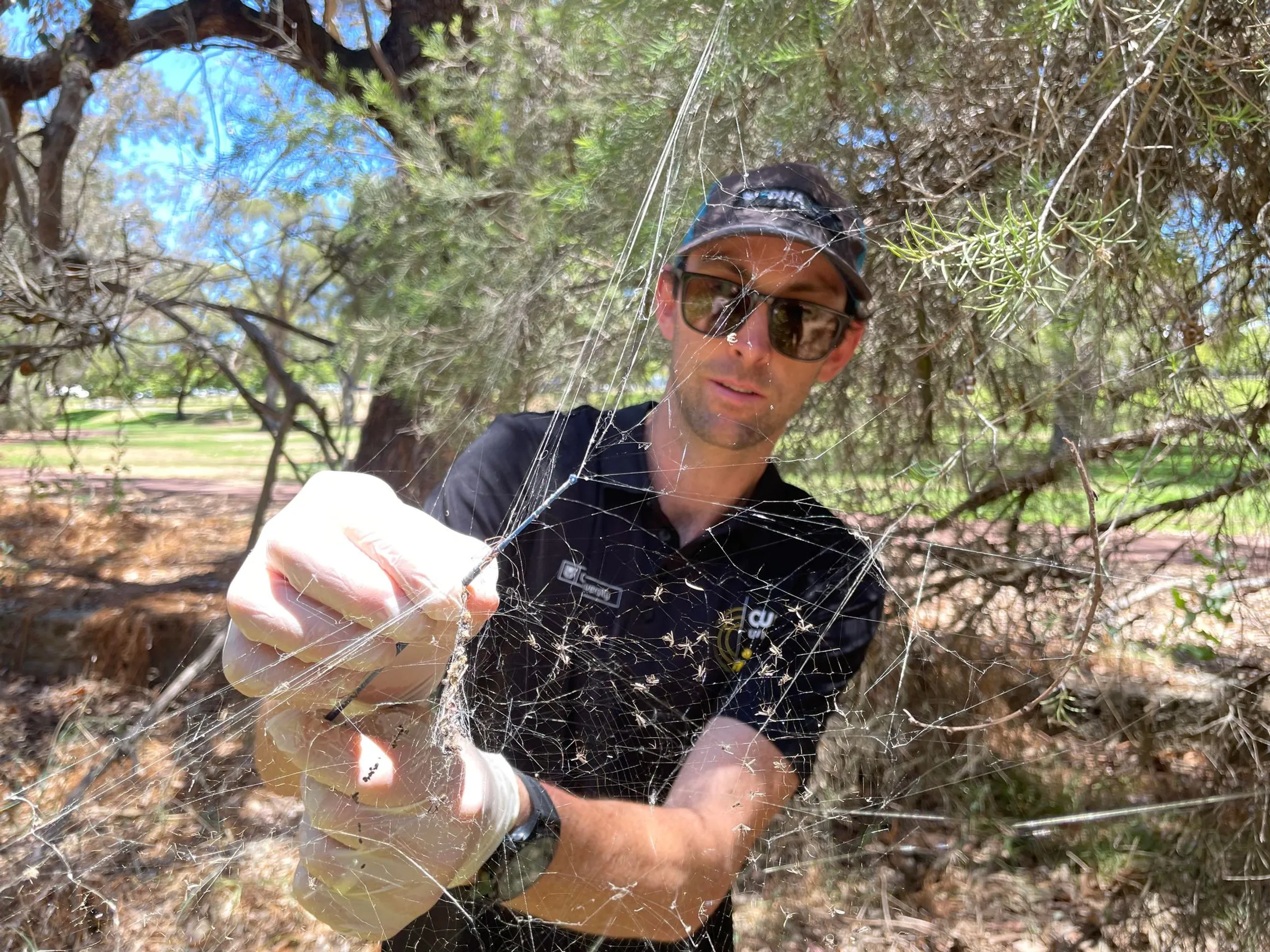
The fourth project compared different sample types – including spiderwebs, soil, vegetation and airborne DNA – to assess strengths and limitations of each for detecting different groups of organisms.
The final study involved an airborne eDNA transect covering more than 1,000 kilometres from Perth to Cocklebiddy, in the Goldfields-Esperance region of WA, using a vehicle-mounted sampler. This showed rapid, large-scale biodiversity surveys across remote landscapes are possible.
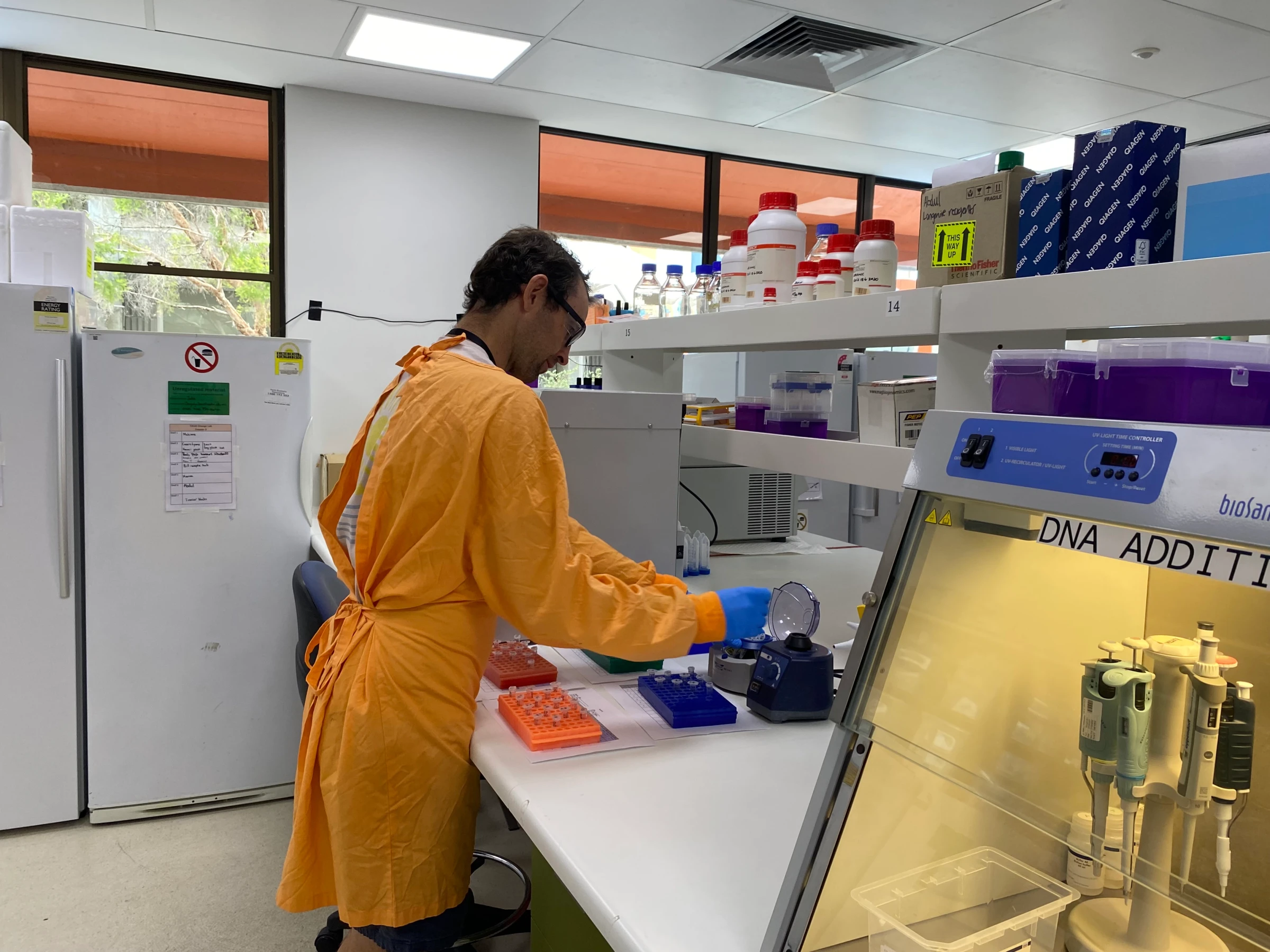
Curtin School of Molecular and Life Sciences Research Associate Dr Joshua Newton works in the Trace and Environmental DNA Laboratory and led the delivery of the projects.
“This collaboration with MinRes has allowed us to rigorously test environmental DNA-based biodiversity assessment in terrestrial environments, from exploring new sample types like spiderwebs through to scaling up to the largest terrestrial eDNA survey conducted to date,” Dr Newton said.
“Across the five projects, we showed that terrestrial eDNA can be applied in real-world monitoring, but it needs to be done carefully.”
Dr Newton said sample methods and the ways materials are chosen and processed can fundamentally change what is detected.
“The hope is that this type of research helps bring biodiversity monitoring into a space where it is faster, more scalable and genuinely useful for both science and industry decision-making,” he added.
The Curtin study presents an important step towards making biodiversity monitoring faster, smarter and more adaptable.
By using eDNA, MinRes and Curtin are helping lead environmental science innovation, supporting strong compliance while protecting important ecosystems.
Learn more about MinRes’ approach to biodiversity.