Sustainability approach
Embedding sustainable practices to minimise environmental impact, support communities and drive long-term value.

Our commitment
MinRes is committed to improving our sustainability performance while providing the metals and minerals the world needs.
We strive to make a positive impact through innovation and leadership in mining services and operations, promoting responsible business practices and sustainability to maintain our social licence to operate. By embedding responsible mining principles into our decision-making, strategic planning and risk management processes, we aim to create long-term value for all stakeholders.
Our approach
We continue to strengthen the integration of sustainability initatives across our business and comply with all relevant legislation and regulations.
Sustainability initiatives
MinRes’ sustainability reporting is guided by several voluntary initiatives, memberships, standards and goals to ensure comprehensive and transparent disclosure of our sustainability performance.
Materiality approach
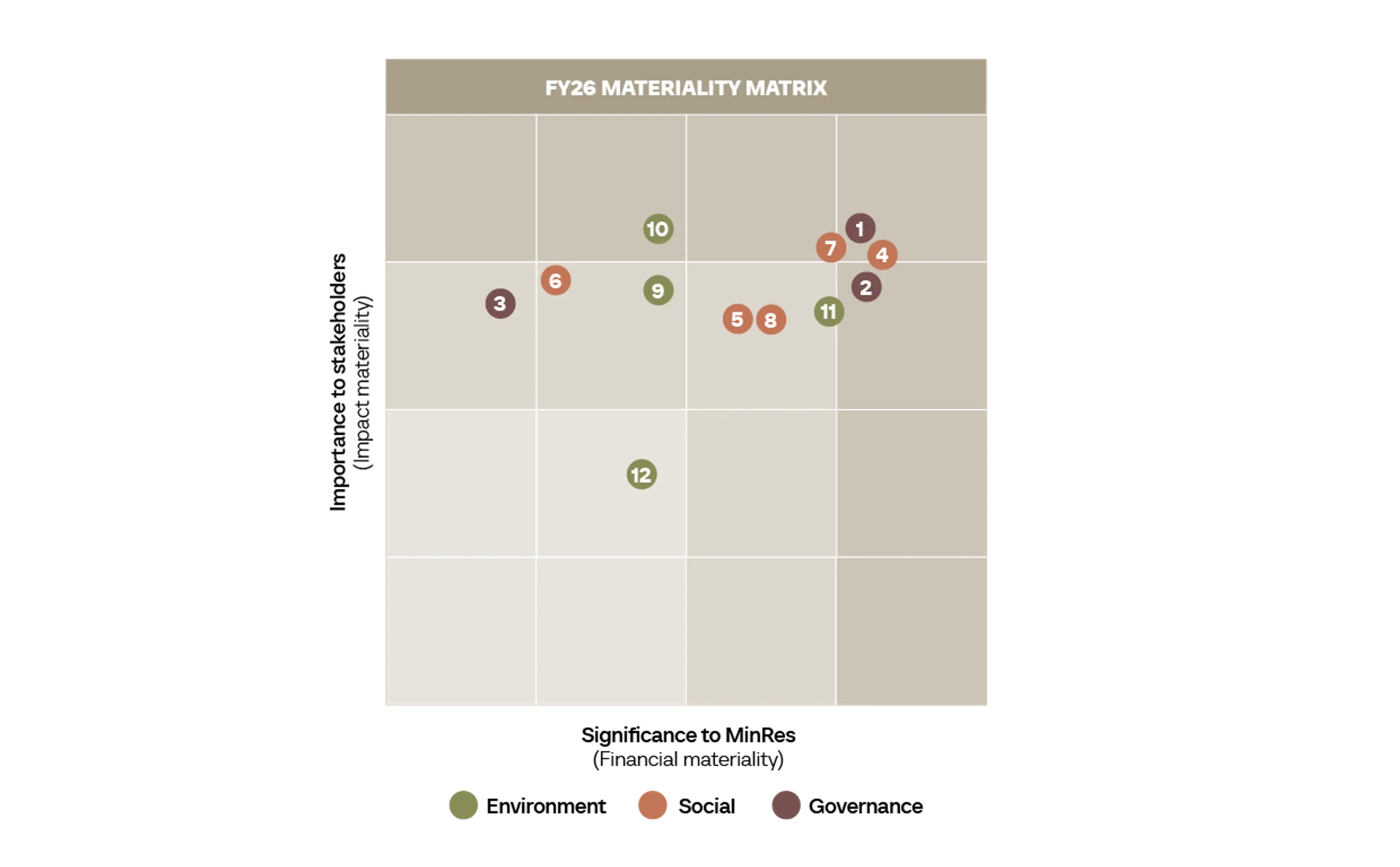
MinRes applies a double materiality assessment process on a three-year cycle. This process evaluates both the potential impact our operations have on people, communities and the environment (impact materiality) and the potential for sustainability topics to affect MinRes' financial performance and enterprise value (financial materiality).
In FY26, MinRes engaged an external consultant to conduct a desktop review against global standards, macro trends and peer practices, along with internal stakeholder group interviews.
The refresh reaffirmed MinRes' 12 material sustainability topics, with the relative prioritisation of several topics, including ethics and integrity, value and performance, water, working with Traditional Owners and health, safety and wellbeing, reflecting changes in our operating environment, governance context and evolving expectations from our stakeholders.
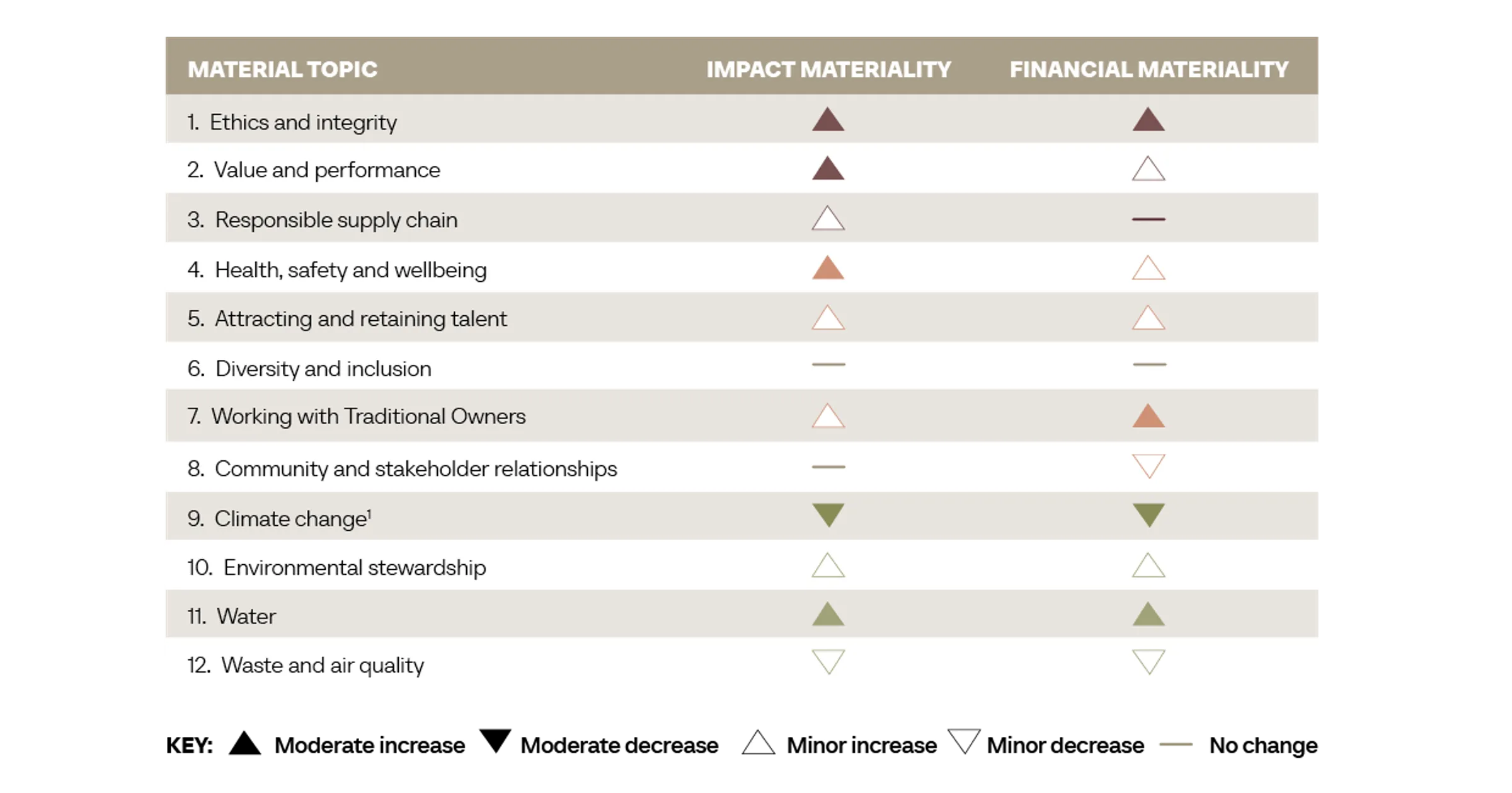
Change in materiality from the previous reporting period
Our FY27 targets
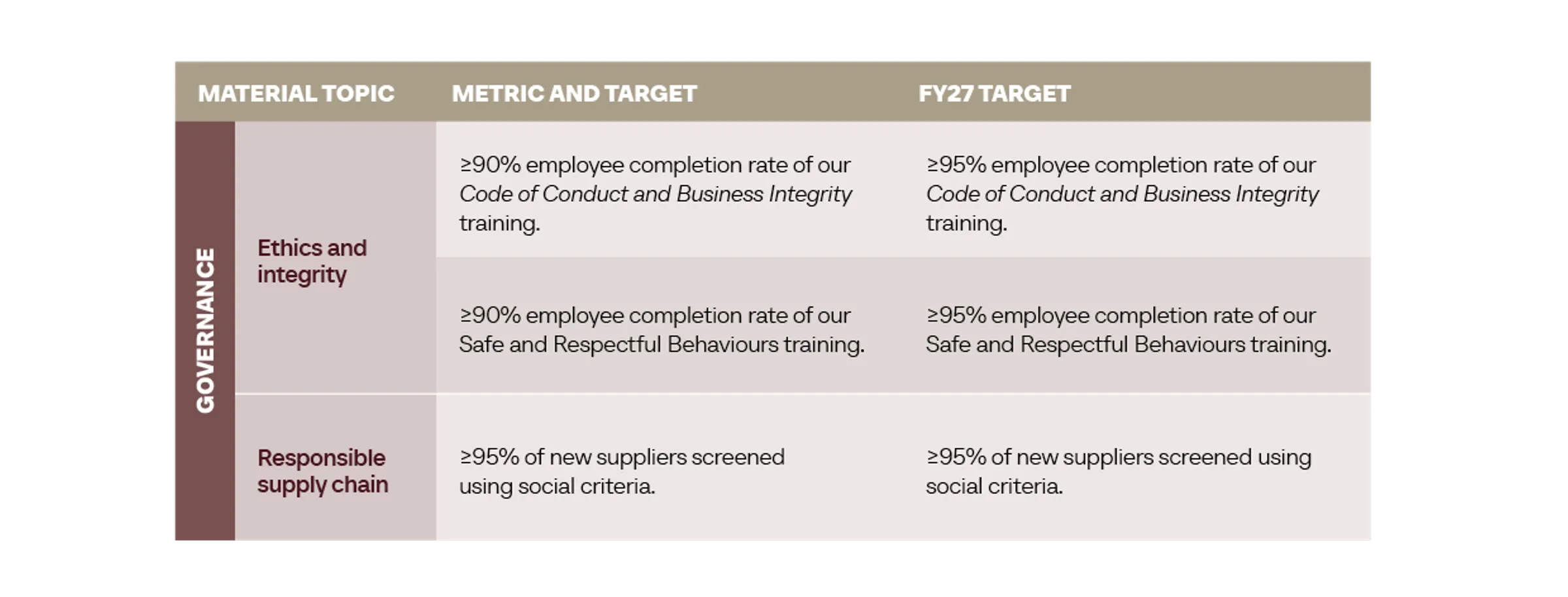
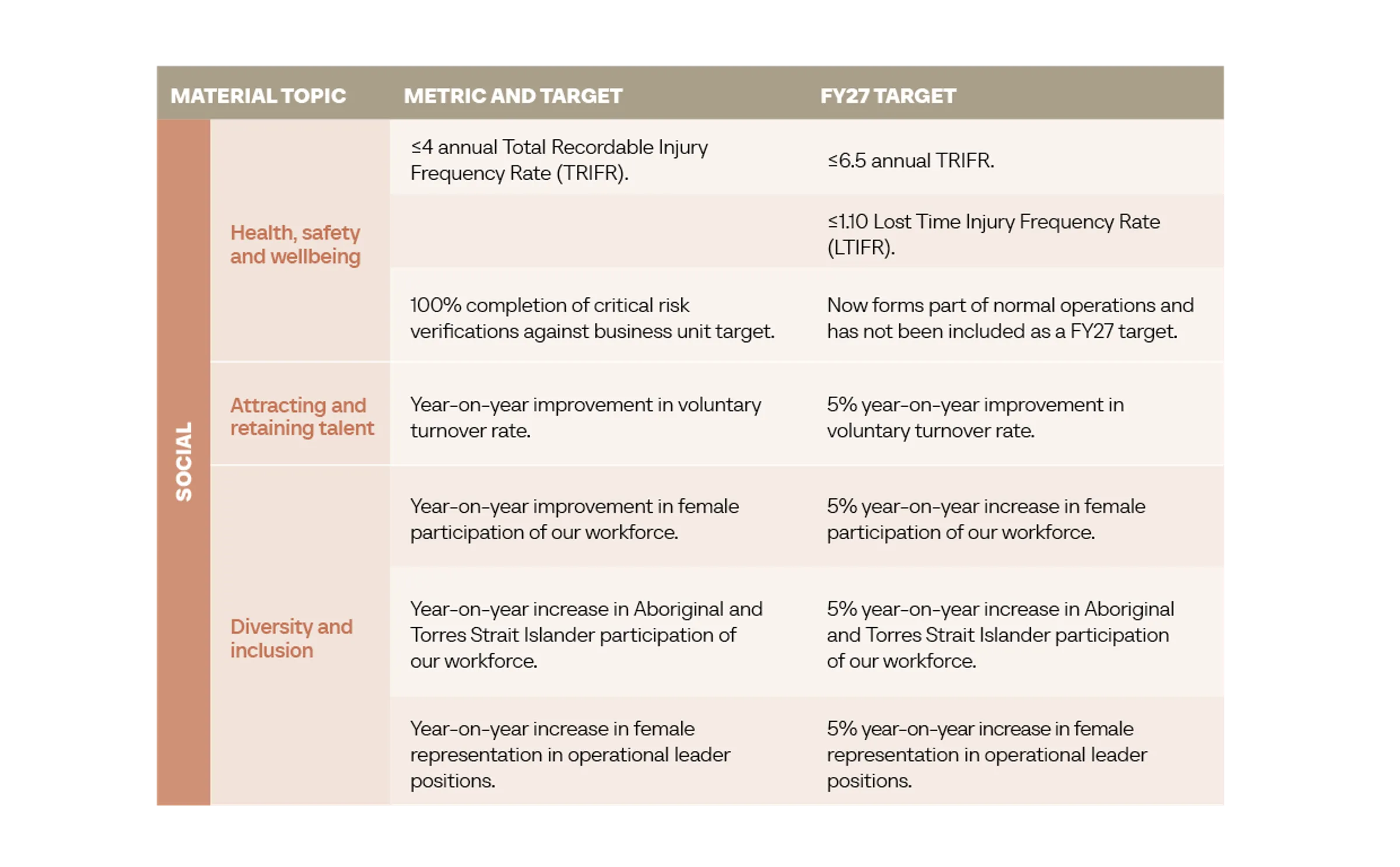
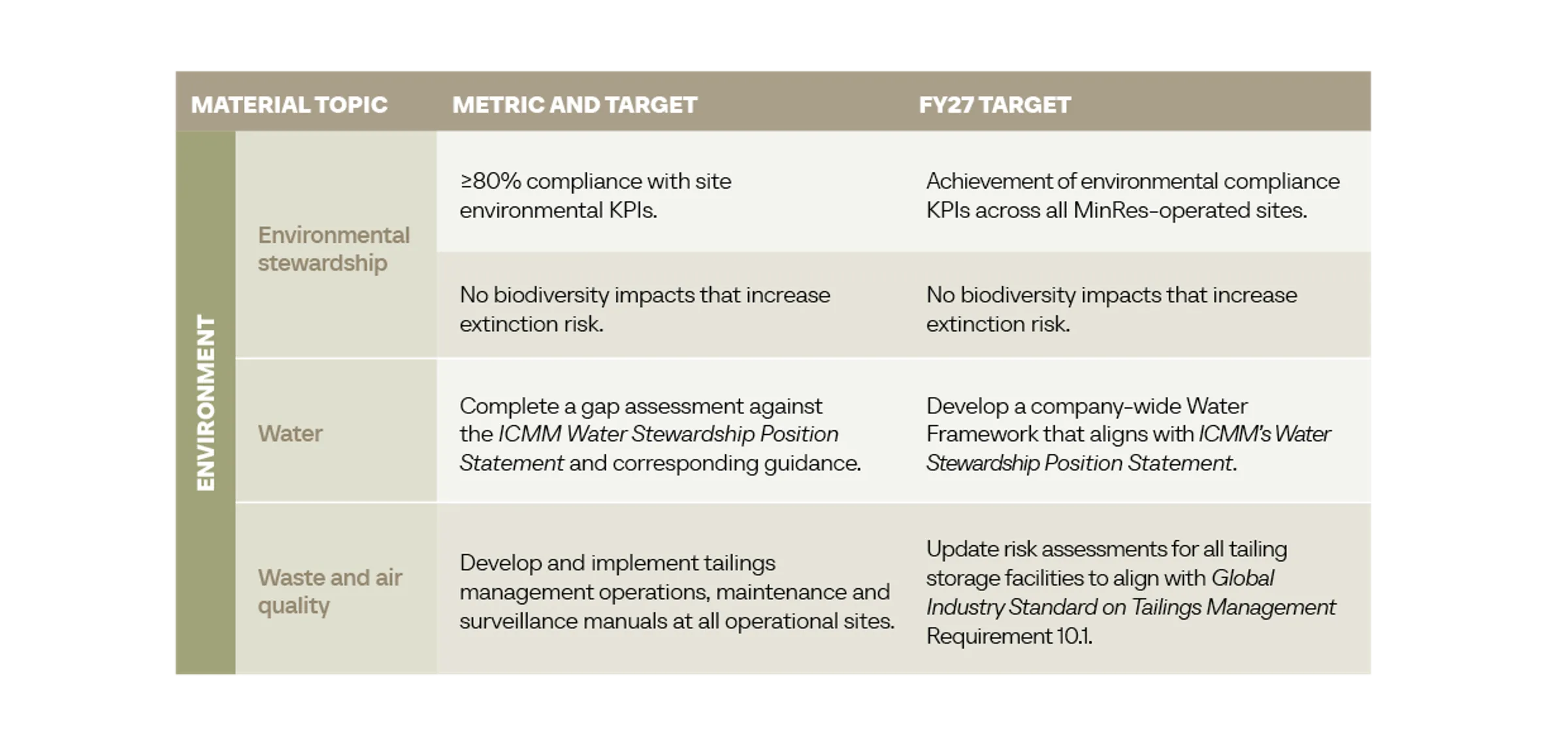
Board approved sustainability performance targets have been set to address our material topics.
Developed with a focus on continuous improvement and meaningful outcomes for all stakeholders, MinRes will target the following in FY27: