Climate change
Addressing climate change is essential for our future and we are committed to reducing emissions and building resilience across our operations.


Our commitment
We are committed to understanding and managing our climate related risks and opportunities, including reducing our emissions, supporting decarbonisation and increasing the resilience of our assets and operations.
Our approach
MinRes supports the objectives of the Paris Climate Agreement and acknowledges the importance of meeting these targets by understanding how climate change may affect our operations, customers and the communities in which we operate.
Our approach to climate change and reporting is guided by international principles, established frameworks, best practice and regulatory compliance requirements.
We recognise the importance of taking action to reduce our carbon footprint and managing our impact on the natural environment. Our strategy is to adopt a practical and project-driven approach to decarbonisation with a focus on driving measurable emissions reduction through a disciplined, incremental and balanced approach.
Climate governance
To ensure appropriate management of climate-related risks and opportunities, climate change is incorporated through our corporate governance framework and receives Board and Sustainability Committee oversight.
Our Board has ultimate responsibility for strategic oversight of the company, risk assessment, management and sustainability. Climate-related risks and opportunities are considered by the Board when performing its responsibilities.
The Board delegates oversight of climate-related management to various committees. Refer to our Governance page for more information on each charter.
The Sustainability Committee assists the Board with overseeing climate-related matters including:
- Climate strategy, performance and reporting.
- Climate-related policies, procedures and systems.
- Identification, management and reporting of climate-related risks and opportunities (excluding any financial reporting considerations which are the responsibility of the Audit and Risk Committee).
- Assisting the Audit and Risk Committee with managing risk associated with the company’s climate-related risks.
- Approving internal and external assurance programs for climate-related information.
- Reviewing and recommending to the Board for approval, climate-related targets and monitoring progress towards those targets.
The Sustainability Committee meets at least four times per financial year and reports to the Board after each committee meeting to provide recommendations.
The Audit and Risk Committee assists the Board with overseeing risk management in relation to climate-related matters. This committee is responsible for the following climate-related matters:
- Overseeing management’s design and implementation of internal controls, including in relation to the integrity of climate-related financial reporting.
- Assisting the Board with reviewing climate-related financial risks.
- Overseeing the design and implementation of MinRes’ Risk Management Framework, including in relation to climate-related risks.
- The identification, management and reporting of financial disclosures of climate-related risks and opportunities.
The Audit and Risk Committee meets at least four times per financial year. The Chief Financial Officer attends each Audit and Risk Committee meeting and management provides an update on the company’s risk register, including climate-related risks, controls and mitigating actions.
The Nomination Committee assists the Board with overseeing the overall skill level and expertise of the Board. This committee is responsible for the following climate-related matters:
- Reviewing and recommending to the Board for approval, a Board skills matrix setting out the mix of skills, competencies, experience, expertise and diversity the Board has and is looking to achieve in its membership.
- Reviewing any continuing education for existing directors to maintain the skills, competencies, knowledge and experience needed to perform their roles effectively, including in relation to climate-related risks and opportunities.
The Nomination Committee meets at least twice per financial year and reports to the Board after each committee meeting to provide recommendations.
The Board delegates the day-to-day responsibility for delivering MinRes’ climate-related strategy to various leaders in the business. The Board oversees the delivery of this strategy through the various committees outlined above. The relevant responsibilities of key leaders are described below:
- The Managing Director is responsible for aligning the company’s business practices and strategy with our climate-related commitments and ambitions.
- The Chief Financial Officer is responsible for overseeing the overall risk management including climate-related risks and incorporating climate-related matters into financial practices, including financial reporting.
- The Director Strategy is responsible for implementing the company’s climate strategy and overseeing the overall strategy to identify, manage and respond to climate-related risks and opportunities.
- The chief executives are responsible for overseeing specific business unit climate-related risks and opportunities as delegated by the Chief Financial Officer and administering the company’s decarbonisation activities at their respective sites.
Management are supported in the delivery of their duties by the following steering committees:
- Decarbonisation Steering Committee.
- Australian Sustainability Reporting Standards (ASRS) Steering Committee.
The steering committees are supported by dedicated working groups comprising of subject matter experts from across the business, including:
- Decarbonisation Working Group.
- ASRS Working Group.
These committees were established as cross-functional bodies to draw together workstreams across MinRes related to climate and have collective oversight and scrutiny of the associated workstreams.
The MinRes Climate Change Policy acknowledges our responsibility to address the impact of our operations on the environment and to drive action to reduce the operational emissions of our business. The Policy outlines MinRes’ commitment to managing climate-related opportunities and risks.
Climate change strategy
We recognise the importance of taking steps to reduce our carbon impact. We have a role to play in mitigating climate change by decarbonising our operations and supply chain. At the same time, we are also preparing to adapt to climate-related risks and capitalise on opportunities caused by a changing climate.
In FY24, MinRes completed climate scenario analysis to identify the current and anticipated effects of climate-related risks and opportunities.
We commit to reassessing our lists of climate-related risks and opportunities as part of each strategic planning cycle in line with our risk management framework. We also undertake additional reviews when there is a material impact to our business operations.
In FY26, MinRes will be disclosing climate-related risks and opportunities in accordance with the AASB S2 guidelines.
Refer to our 2025 Sustainability Report for our identified risks and opportunities.
Decarbonisation strategy
MinRes is committed to its long-term goal of achieving net zero by 2050. Our interim target is to reduce our Scope 1 and 2 mining emissions intensity by 45 per cent in FY35 relative to our FY24 baseline.1
To achieve these ambitions, we aim to focus on driving measurable emissions reductions through a disciplined, incremental approach that balances technical viability, economic returns and organisational capability. In conjunction, we aim to design our new facilities and projects to have a lower emission profile or be ready to enable use of lower emissions technologies in the future as compared to a conventional business as usual design.
Refer to the figure below for our forecasted emissions trajectory to FY35 interim target.

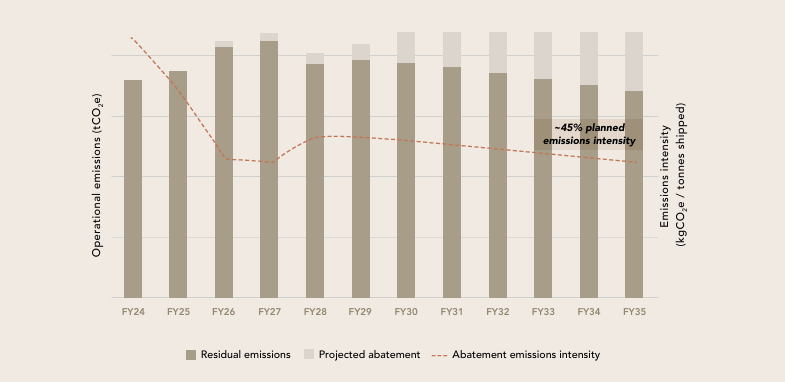
In recognition of the current and future need to fund decarbonisation initiatives and to meet our obligations under the Safeguard Mechanism, we established the Decarbonisation Fund in FY25.
All projects under MinRes’ operational control are charged for every tonne of emissions they generate.
This charge is proportional to MinRes’ equity share in the given project across our diverse portfolio.
Refer to Decarbonisation fund page for further information.
Metrics
MinRes tracks operational GHG emissions monthly and annually discloses our energy consumption, Scope 1 and 2 GHG emissions data to the Clean Energy Regulator, through the NGER Act. We also disclose this information as part of our annual reporting suite.
We use emission factors disclosed in the National Greenhouse and Energy Reporting (Measurement) Determination 2008.
Our performance
In FY25, our Group’s total emissions were 745,170 tCO2e (Scope 1: 731,084 and Scope 2 market-based: 14,086). We achieved an emission intensity of 26.4 kgCO2e/ wmt shipped.2
Refer to figure below for a breakdown of our emissions by site.

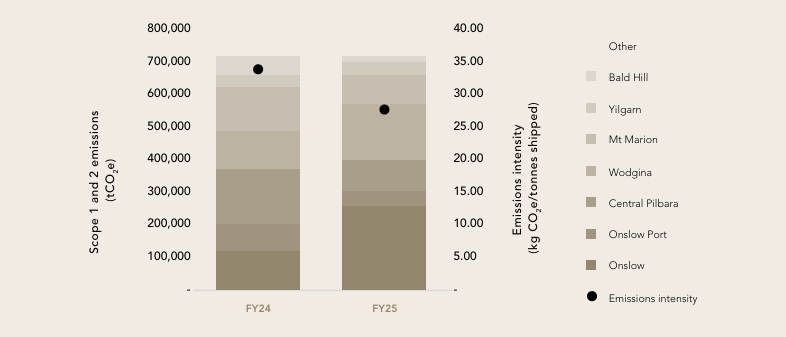
1. On a kgCO2e emitted per tonne of product shipped basis.
2. This includes Scope 1 emissions of 20,817 tCO2e relating to Yilgarn sites sold to an external third part in June 2025.


Related news

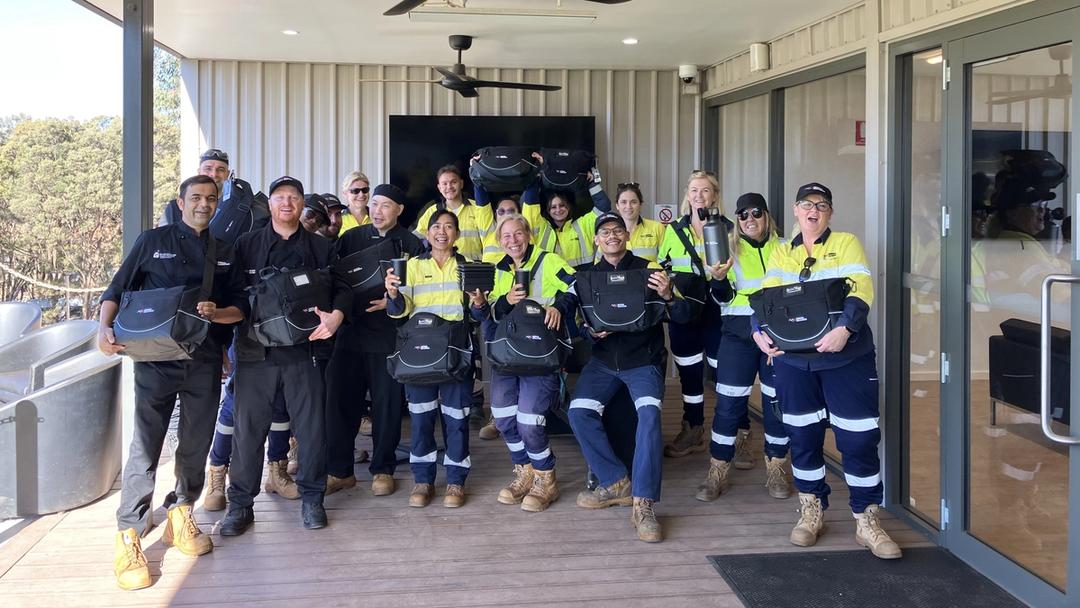
Mineral Resources (MinRes) has eliminated thousands of single-use meal containers from its operations by rolling out more than 5,000 reusable crib kits to its workforce — a move aimed at reducing waste and costs while driving positive change across its Western Australian mine sites.

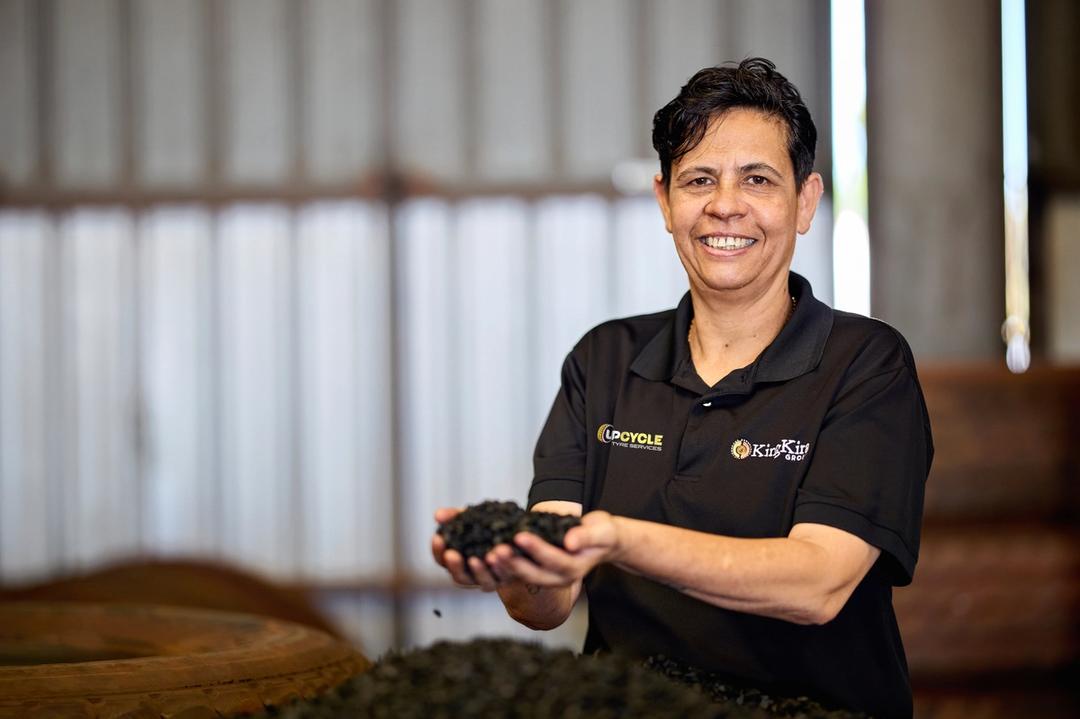
Indigenous-led business Upcycle Tyre Services has been awarded a $5 million contract to MinRes' recycle haulage tyres.


Mineral Resources’ (MinRes) Osborne Park head office has become just the second building in Western Australia to achieve WELL V2 Platinum Certification.