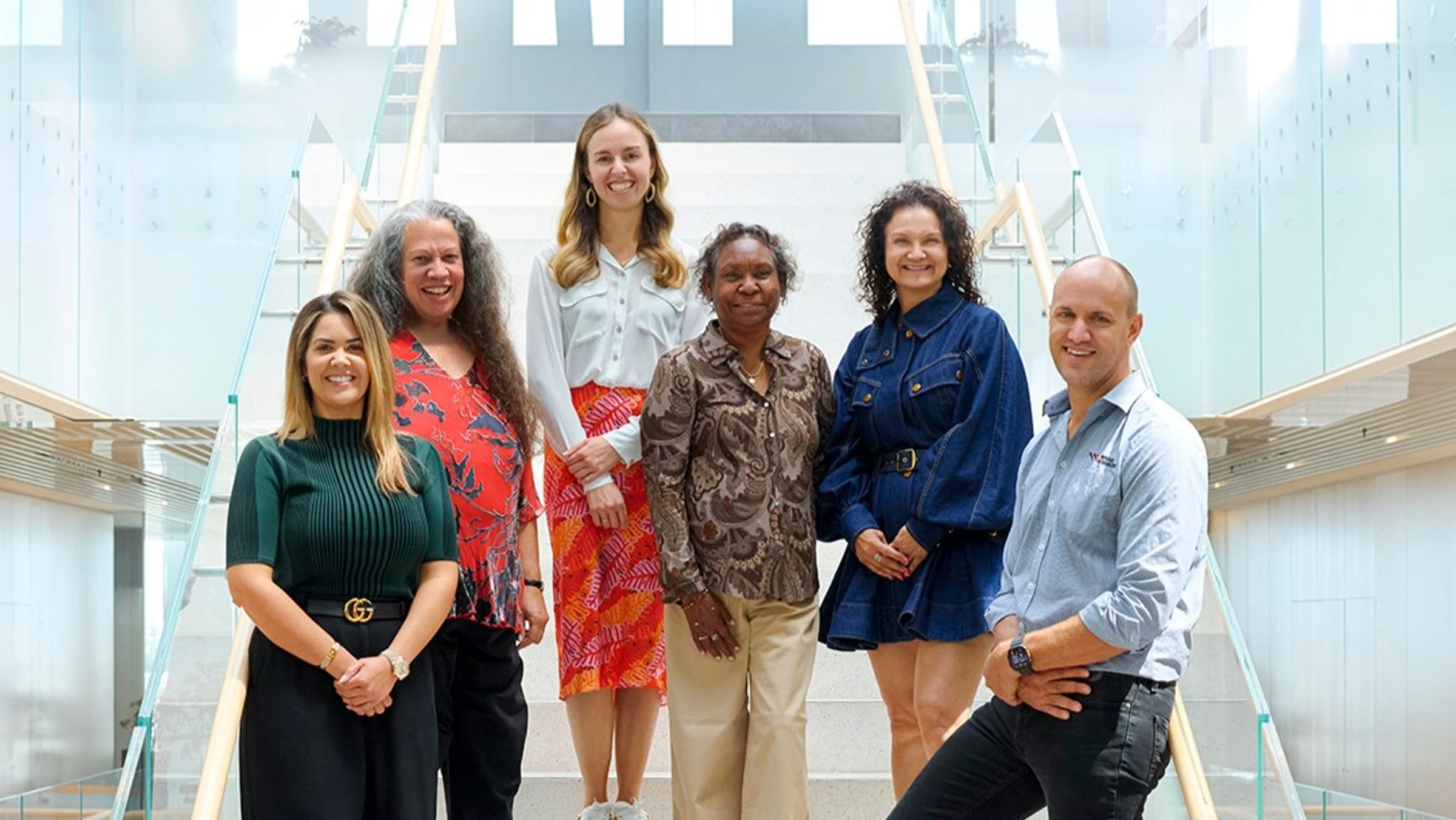
The discussion took place at a roundtable in Perth hosted by Mineral Resources (MinRes), bringing together Aboriginal business owners at different stages of growth alongside representatives from ANZ.
Chaired by MinRes Independent Non-Executive Director and Noongar leader Colleen Hayward AM, the session focused on what it takes not only to start an Aboriginal business, but to sustain and grow it over time.
A consistent message emerged: long-term success depends on aligned growth between businesses, their clients and access to capital.
Shelley Cable, Head of First Nations Strategy at ANZ, said partnerships between corporates, financiers and Aboriginal businesses were critical to unlocking growth.
“ANZ can’t do this by ourselves. MinRes can’t do it by themselves. First Nations businesses can’t do it by themselves,” she said.
“But with the three parties together, we’ve been able to accelerate getting finance into the hands of First Nations businesses.”
Cable pointed to ANZ’s First Nations Guarantee Program, delivered in partnership with MinRes and other corporate guarantors, which has enabled businesses that would otherwise not meet traditional lending criteria to access finance.
However, participants made clear that access to finance and contracts is only the starting point.
MinRes Manager of Aboriginal Business Development Ashley Carey said the company has adopted a hands-on approach to supporting Aboriginal contractors beyond procurement.
“We don’t just set and forget,” Carey said.
“We attend quarterly financial reviews, we look at cash flow projections and we work with them on site to make sure they’re supported operationally.
“It’s a labour-intensive process, but it’s the only way to get proper outcomes.”
Carey said the program currently supports around 10 Aboriginal businesses and is expanding into more diverse sectors, including recruitment, landscaping and services.
He also noted that traditional finance models remain a barrier.
“The traditional models are quite rigid,” he said. “Trying to get money from government sources can be challenging.”
For business owners, the challenges are often practical and immediate.
PMW Industries Managing Director and Banjima Traditional Owner Paula White described building her business without access to early-stage finance.
“I went to the bank and asked for a loan and they said no,” White said.
“So as more money came into the business, I would go and buy equipment or vehicles outright and then work out how long it would take to get a return.”
White said financial discipline, particularly around tax and payroll obligations, was critical to survival.
“You pay your tax, you pay your BAS, you pay your super,” she said.
“At the end of the day, the money in the business is not yours.”
White also highlighted the cost of workforce onboarding in the resources sector, estimating it can cost up to $3,000 per employee before they are operational.
“If they leave, you don’t get that back,” she said.
“And then you have to start again.”
The issue of financial literacy was also identified as a key risk area for emerging businesses.
Carey said some businesses struggle when initial payments are received.
“They see big chunks of money come in, and they don’t realise there’s tax, payroll and other liabilities coming,” he said.
Noongar business leader Sharna Collard is also CEO of Kooya, the first and largest Aboriginal-owned salary packaging company which also specialises in fleet leasing and rentals.
She suggested sustainable growth requires time and trust between clients and suppliers.
“It’s the incremental growth that Kooya has had that has enabled me to grow with my customer base,” White said.
“You have to prove your worth. If anything, you have to do tenfold that.”
Collard said Kooya’s growth has been built on long-term relationships with clients, allowing the company to expand its services over time.
She also spoke about Kooya’s transition from a joint venture to full Aboriginal ownership.
“We bought our shareholders out and it’s been the best decision that I’ve ever made,” she said.
“It was the most liberating experience.”
Joint ventures were a major point of discussion, with participants warning that poorly structured agreements can limit Aboriginal ownership and control.
“There are a lot of predators out there,” Carey said.
“People see an attachment to an Aboriginal business as a way into procurement.”
Collard said better standardisation of joint venture agreements is needed.
“It can work, but the foundations need to be set correctly from the beginning,” she said.
Paula White added that cultural alignment is often overlooked in joint ventures.
“The leaders have to build that culture on the ground,” she said.
“Otherwise it becomes a them-and-us environment.”
The discussion also addressed broader structural challenges, including competition within the sector and limited collaboration between Aboriginal businesses.
Collard said there is growing momentum towards collaboration but more progress is needed.
“I don’t think we’re doing enough yet, but we’re on the right trajectory,” she said.
White was more direct.
“A lot of businesses go about doing their own thing and don’t want to collaborate,” she said.
However, Georgina Bobby - founder of Jaliyarnu Yinta, which plays a critical role in maintaining the landscape at MinRes’ Onslow Iron project- said attitudes are beginning to shift.
“In the beginning I was against other Indigenous businesses coming into our area", she said.
“But then I thought, there are lots of other companies coming in. Why not support each other?”
Bobby started her business recently with support from MinRes and ANZ, including access to finance and small business grants.
“I had no interest at all in starting a business,” she said.
“But I took the opportunity while it was there.”
Bobby said the business was named after her traditional Country and is intended to support future generations.
“It’s for my kids and my grandchildren,” she said.
Participants also emphasised that Aboriginal businesses often operate with broader social objectives than mainstream enterprises.
Collard said Kooya directs 5% of its net profits into community programs through the Bibbulmun Fund.
“That allows us to balance purpose and profit,” she said.
White said her approach is less formal but equally important.
“I don’t advertise what I do,” she said.
“If someone needs help, I help.”
Cable said this difference should be better understood by corporate clients.
“It’s about what the business enables you to do, and what success looks like.
“That’s where First Nations businesses are different.”
She also challenged organisations to examine their motivations.
“Are you procuring from First Nations businesses because of a spend target?” she said.
“Or is it because you want to contribute to a social outcome? Your approach needs to reflect your intent.”
The roundtable concluded with calls for stronger collaboration across industry and more structured support for emerging Aboriginal businesses.
Carey suggested establishing regular forums to connect business owners at different stages.
“We’ve got different generations of businesses in the room,” he said.
“Bringing experience and ambition together is critical.”
Cable pointed to broader economic trends, noting that First Nations businesses generated more than $16 billion in revenue in 2021–22 and are projected to exceed $50 billion annually by 2035.
“There’s even more to come,” she said.
Participants agreed that while momentum is building, sustained growth will depend on deeper partnerships, better-designed procurement frameworks and continued investment in capability.
Hayward noted in closing that the challenge is now to turn discussion into action and ensure Aboriginal businesses are supported to grow beyond initial opportunity into long-term, self-sustaining enterprises.
“MinRes is committed to supporting Aboriginal businesses in practical ways that go beyond simply counting the extent of financial investment through procured contracts to real-capability-building,” she said.
This article was originally published by Zak Kirkup in the April 2026 edition of the Indigenous Business Review.